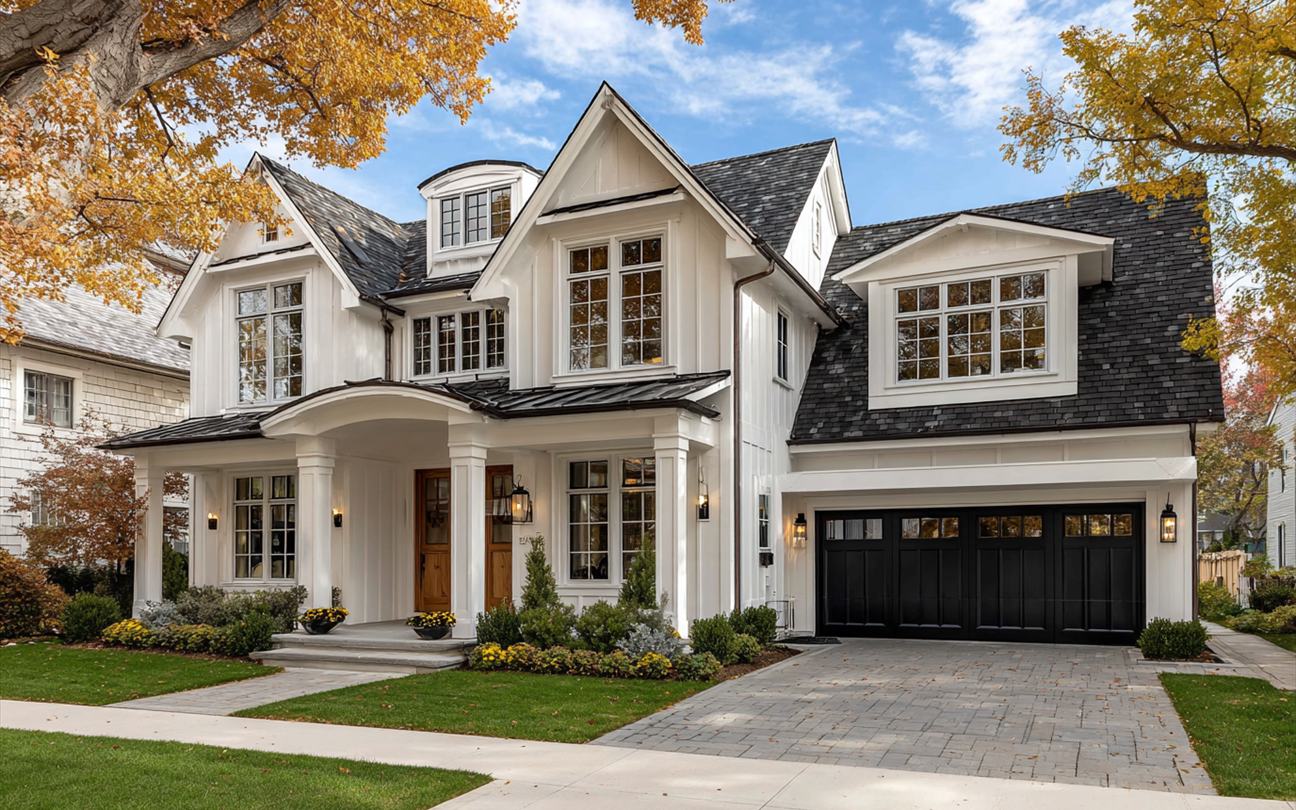
When a roofer hands you a sample board, the choice looks like a color. It's really a choice of product line, with different thickness, wind ratings and warranty terms behind each name. Here's how to read what's on the board and the paperwork, without picking a brand for you.
The Three Main Types
| Type | What it is | How it looks | Typical use |
|---|---|---|---|
| 3-tab | A single flat layer cut into three tabs | Flat, uniform rows | Older roofs; less common on new full roofs now |
| Architectural (dimensional, laminated) | Two layers bonded together, with a shadowed pattern | Textured, varied | The standard choice for most reroofs |
| Designer (premium) | Thicker, multi-layer shingles shaped to resemble slate or shake | Bold texture, larger profile | Higher-end homes and historic looks |
What the Labels Mean
- Wind rating: the wind speed the shingle is tested to resist when installed exactly as the manufacturer specifies, often with more nails per shingle for the higher rating.
- Algae resistance: granules that slow the black streaks common on shaded roofs.
- Impact rating: resistance to hail, less of a factor in central New Jersey than in hail country.
- Long-term warranties: however long they sound, usually limited, prorated after an initial period, and tied to the original owner.
The bigger difference between warranties often comes from the installer, not the shingle. Manufacturers typically offer their strongest coverage only when a certified contractor installs a full system of their components: underlayment, ice barrier, starter strips, hip and ridge caps and vents.
Starter Strips, Ridge Caps and the Rest of the System
The shingles you see are only part of what keeps water out. Starter strips along the eaves and rakes give the first course something to seal to, which matters a lot in wind. Hip and ridge caps cover the peaks with thicker pieces made for bending over the ridge. Underlayment and ice barrier sit beneath everything. When a manufacturer talks about a "system," it means using its own versions of all of these together. Ask the roofer which parts of the system they'll use, because it affects both how the roof performs in a nor'easter and which warranty you can register.
Questions Worth Asking
- Which product line is this, exactly, not just the brand?
- What wind rating does it carry, and what nailing pattern does that require?
- Which warranty tier will I qualify for with your installation?
- Is the warranty registered by you or by me, and is it transferable if I sell?
- Are you using the manufacturer's own underlayment, starter and ridge products?
Color and Your House
Darker colors absorb more heat. In a well-ventilated attic, that matters little. Over a hot, under-ventilated ranch attic, it adds to the heat that ages shingles. Look at the full board outdoors, in daylight, and drive past a house with the same color before deciding. Many owners also match the color to the siding, the trim and the neighbors' roofs.
What About Brand?
The large manufacturers all sell several product lines at different price points. Within a line, the differences between brands are smaller than the differences between installers. A well-installed mid-range architectural shingle usually outlasts a premium shingle installed carelessly.
Questions
Can I mix shingle types on one house?
On separate roofs, like a garage, yes. On the same roof, mixing usually looks wrong and can affect the warranty.
Are 3-tab shingles still available?
In some product lines, but many roofers now install architectural shingles as the standard for full roofs.
Is a "50-year" shingle going to last 50 years?
Rarely. The number describes the warranty, which is limited and usually prorated. Real life depends on installation, ventilation and exposure.
Around Edison
Newer colonials in North Edison and wind-exposed streets in Bonhamtown are where wind ratings matter most. The full job is on asphalt shingle roof replacement.
How Long a Roof Lasts in Central New Jersey
Lifespans by material, and what shortens them.
What a Roof Replacement Costs Depends On
Everything that moves the number, minus the number.